Prohibited Overtaking Zones and Double White Lines
Introduction
Overtaking is a high-risk driving maneuver that requires crossing into lanes designated for oncoming traffic. To prevent head-on collisions, traffic authorities designate specific road segments as "Prohibited Overtaking Zones" using solid lane paint, double lines, and roadside signs. Motorists must understand and respect these boundaries. For official road marking guidelines, visit the [MoRTH India Portal](https://morth.nic.in).
Rule Explanation
Prohibited overtaking zones are designated in areas with limited forward visibility or high intersection density. Solid white or yellow paint lines act as physical barriers that drivers must not cross. Below are the road markings and their overtaking rules:
| Center Line Pattern | Legal Status | Passing Rule |
|---|---|---|
| Double Solid White / Yellow Lines | Prohibited | Strictly no crossing. Overtaking is illegal in both directions. |
| Single Solid White / Yellow Line | Restricted | Stay within your lane. Crossing is only permitted to turn into driveways. |
| Solid & Broken Line Combined | Directional | Overtaking is permitted only if the broken line is on your side. |
| Broken White / Yellow Line | Permitted | You may cross to overtake when the road ahead is clear and safe. |
Crossing solid double lines on curves or narrow roads is a primary cause of head-on collisions on national highways.
Practical Examples
Real-world overtaking scenarios: 1. Mountain Passes (Ghat Roads): Hilly roads are painted with solid yellow lines. You must stay on your side of the road, even if stuck behind a slow tractor, until you reach a straight stretch with broken lines. 2. Approaching a Bridge: As you approach a narrow bridge, the broken lines will change to solid double lines. You must complete any overtaking maneuvers before the solid lines begin. 3. School and Hospital Zones: These zones are designated as no-overtaking areas to protect crossing pedestrians.
Penalties & Fines
Violating lane markings carries significant fines:
Common Violations
Typical lane violations:
Safety & Compliance Tips
Defensive driving tips:
Frequently Asked Questions
This content is aligned with the Motor Vehicles Act, 1988 and Central Motor Vehicles Rules. Always verify with official notifications for the latest amendments.
 Stop Sign
 Give Way
 No Entry
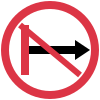 One Way Right