Pedestrian Crossing Light Signals & Right-of-Way
Introduction
Pedestrians are the most vulnerable road users, accounting for a high percentage of urban traffic fatalities. To protect them, intersections are equipped with pedestrian crossing signals (walk/don't walk signs) synchronized with vehicular traffic lights. Understanding right-of-way rules at zebra crossings is legally mandatory for all drivers. For official road safety codes, visit the [MoRTH India Portal](https://morth.nic.in).
Rule Explanation
Pedestrian signals use symbols and colors to coordinate crossing times. Zebra crossings indicate zones where pedestrians have priority. When a pedestrian enters a zebra crossing, all approaching vehicles must stop. Here are the pedestrian signal definitions and motorist obligations:
| Pedestrian Signal | Meaning | Motorist Obligation |
|---|---|---|
| Green Walking Figure | Walk | Yield right-of-way. Stop completely before the zebra crossing line. |
| Flashing Red Figure | Don't Start | Expect pedestrians to finish crossing; do not accelerate. |
| Solid Red Standing Figure | Don't Walk | Vehicles have green light; proceed with caution, checking for jaywalkers. |
| No Pedestrian Signal (Unmarked) | Zebra Crossing | Yield priority to any pedestrian who has stepped onto the zebra crossing. |
Failure to yield right-of-way at crossings places pedestrians in immediate danger, carrying heavy fines.
Practical Examples
Real-world crossing scenarios: 1. Turning at Intersections: If you are turning left on a green light, and the pedestrian signal for the side road is green, you must stop and let the pedestrians cross before completing your turn. 2. Uncontrolled Pedestrian Crossing: As you approach a zebra crossing near a school or market, slow down. If you see a pedestrian waiting at the curb, come to a stop to allow them to cross safely. 3. Stop Line Compliance: During a red light, stopping your vehicle on top of the zebra crossing blocks pedestrians, forcing them to walk into active traffic lanes. Always stop before the white line.
Penalties & Fines
Violating pedestrian safety laws is heavily penalized:
Common Violations
Typical pedestrian safety infractions:
Safety & Compliance Tips
Safety tips for drivers:
Frequently Asked Questions
This content is aligned with the Motor Vehicles Act, 1988 and Central Motor Vehicles Rules. Always verify with official notifications for the latest amendments.
 Stop Sign
 Give Way
 No Entry
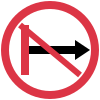 One Way Right