Understanding Traffic Hand Signals by Police Officers
Introduction
While electronic traffic lights regulate most intersections, traffic police officers are deployed to manage heavy traffic, accidents, or broken signals. Their hand signals override all electronic signals and signs. Motorists must understand and obey these manual directives to prevent traffic conflicts. The guidelines for manual traffic control are defined under state police regulations. For official road safety details, visit the [Delhi Traffic Police Website](https://delhitrafficpolice.nic.in).
Rule Explanation
Traffic police officers use standardized hand gestures to stop vehicles, permit turns, and guide specific lanes. These gestures are designed to be highly visible and easily understood. Motorists must wait for clear hand signals before entering the intersection. Here are the primary manual hand signals used by traffic officers:
| Hand Gesture | Meaning | Required Driver Action |
|---|---|---|
| One arm extended vertically up | Stop from Front | Stop your vehicle before the stop line; oncoming traffic from front must stop. |
| Both arms extended horizontally | Stop from Front & Rear | Stop all traffic approaching from the front and rear of the officer. |
| One arm up, other arm waving right | Permit Turn Right | Vehicles approaching from the front are allowed to turn right. |
| Waving arm forward from side | Go Ahead / Proceed | Traffic in the indicated direction may proceed through the intersection. |
| Pointing to specific lane and raising palm | Stop Specific Lane | Only the indicated lane must stop; others may proceed. |
Paying attention to these signals is vital for maintaining intersection discipline when automated systems are unavailable.
Practical Examples
Practical hand signal scenarios: 1. Broken Traffic Light: If the traffic light is green but the police officer raises their palm toward your lane, you must ignore the green light and stop immediately. 2. VIP Movements or Rallies: Officers manually hold traffic to clear routes; wait patiently and do not attempt to bypass their line. 3. Night Control: Officers use reflective batons or lighted wands at night; follow the motion of the light wand as you would their hands.
Penalties & Fines
Disobeying manual traffic controls carries significant penalties:
Common Violations
Typical manual signal infractions:
Safety & Compliance Tips
Tips for interacting with traffic police:
Frequently Asked Questions
This content is aligned with the Motor Vehicles Act, 1988 and Central Motor Vehicles Rules. Always verify with official notifications for the latest amendments.
 Stop Sign
 Give Way
 No Entry
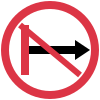 One Way Right